新書推薦:
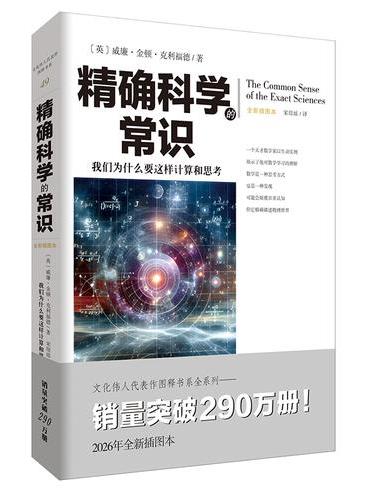
《
精确科学的常识 天才数学家克利福德
》
售價:NT$
194

《
星海赞歌(第十三届北京科幻创作创意大赛“光年奖”获奖作品集)
》
售價:NT$
449

《
沪派江南·古今桥韵——高颜值的文化瑰宝
》
售價:NT$
500

《
中产阶级的孩子们:六十年代与文化领导权
》
售價:NT$
500

《
谈鬼说神
》
售價:NT$
1846

《
走出秦制:清末民初六十年(慈禧、奕?、李鸿章、张之洞、袁世凯、康有为、梁启超、宋教仁等对中国前途的思
》
售價:NT$
602

《
古典与文明·独尊儒术前夕的思想争锋:汉初“前经学时代”研究
》
售價:NT$
459

《
史记 全六册
》
售價:NT$
2030
|
| 內容簡介: |
|
袁锦昀教授是杰出的旅居巴西华人1957年出生于江苏兴化唐刘镇,1977年考入南京工学院,巴西巴拉那联邦大学数学系终身教授、工业数学研究所所长,巴西计算和应用数学学会副会长,巴西数学会巴拉那州分会会长,巴西科技部基金委数学终审组应用数学和计算数学负责人,巴西巴拉那基金委数学终身组成员。 《实用迭代分析(英文版)(精)》是由其创作的英文版实用迭代分析专著。
|
| 目錄:
|
Preface to the Series in Information and Computational Science
Preface
Chapter 1 Introduction
1.1 Background in linear algebra
1.1.1 Basic symbols, notations, and definitions
1.1.2 Vector norm
1.1.3 Matrix norm
1.1.4 Spectral radii
1.2 Spectral results of matrix
1.3 Special matrices
1.3.1 Reducible and irreducible matrices
1.3.2 Diagonally dominant matrices
1.3.3 Nonnegative matrices
1.3.4 p-cyclic matrices
1.3.5 Toeplitz, Hankel, Cauchy, Cauchy-like and Hessenberg matrices "
1.4 Matrix decomposition
1.4.1 LU decomposition
1.4.2 Singular value decomposition
1.4.3 Conjugate decomposition
1.4.4 QZ decomposition
1.4.5 S T decomposition
1.5 Exercises
Chapter 2 Basic Methods and Convergence
2.1 Basic concepts
2.2 The Jacobi method
2.3 The Gauss-Seidel method
2.4 The SOR method
2.5 M-matrices and splitting methods
2.5.1 M-matrix
2.5.2 Splitting methods
2.5.3 Comparison theorems
2.5.4 Multi-splitting methods
2.5.5 Generalized Ostrowski-Reich theorem
2.6 Error analysis of iterative methods
2.7 Iterative refinement
2.8 Exercises
Chapter 3 Non-stationary Methods
3.1 Conjugate gradient methods
3.1.1 Steepest descent method
3.1.2 Conjugate gradient method
3.1.3 Preconditioned conjugate gradient method
3.1.4 Generalized conjugate gradient method
3.1.5 Theoretical results on the conjugate gradient method
3.1.6 GeueuAzed poduct-tpe methods base u -QC
3.1.7 Inexact preconditioned conjugate gradient method
3.2 Lanczos method
3.3 GMRES method and QMR method
3.3.1 GMRES method
3.3.2 QMR method
3.3.3 Variants of the QMR method
3.4 Direct projection method
3.4.1 Theory of the direct projection method
3.4.2 Direct projection algorithms
3.5 Semi-conjugate direction method
3.5.1 Semi-conjugate vectors
3.5.2 Left conjugate direction method
3.5.3 One possible way to find left conjugate vector set
3.5.4 Remedy for breakdown
3.5.5 Relation with Gaussian elimination
3.6 Krylov subspace methods
3.7 Exercises
Chapter 4 Iterative Methods for Least Squares Problems
4.1 Introduction
4.2 Basic iterative methods
4.3 Block SOR methods
4.3.1 Block SOR algorithms
4.3.2 Convergence and optimal factors
4.3.3 Example
4.4 Preconditioned conjugate gradient methods
4.5 Generalized least squares problems
4.5.1 Block SOR methods
4.5.2 Preconditioned conjugate gradient method
4.5.3 Comparison
4.5.4 SOR-like methods
4.6 Rank deficient problems
4.6.1 Augmented system of normal equation
4.6.2 Block SOR algorithms
4.6.3 Convergence and optimal factor
4.6.4 Preconditioned conjugate gradient method
4.6.5 Comparison results
4.7 Exercises
Chapter 5 Preconditioners
5.1 LU decomposition and orthogonal transformations
5.1.1 Gilbert and Peierls algorithm for LU decomposition
5.1.2 Orthogonal transformations
5.2 Stationary preconditioners
5.2.1 Jacobi preconditioner
5.2.2 SSOR preconditioner
5.3 Incomplete factorization
5.3.1 Point incomplete factorization
5.3.2 Modified incomplete factorization
5.3.3 Block incomplete factorization
5.4 Diagonally dominant preconditioner
5.5 Preconditioner for least squares problems
5.5.1 Preconditioner by LU decomposition
5.5.2 Preconditioner by direct projection method
5.5.3 Preconditioner by QR decomposition
5.6 Exercises
Chapter 6 Singular Linear Systems
6.1 Introduction
6.2 Properties of singular systems
6.3 Splitting methods for singular systems
6.4 Nonstationary methods for Singular systems
6.4.1 symmetric and positive semidefinite systems
6.4.2 General systems
6.5 Exercises
Bibliography
Index
|
|

 購物車/收銀台(0) | 在線留言板
| 付款方式
| 聯絡我們
| 運費計算
| 幫助中心 |
加入書簽
購物車/收銀台(0) | 在線留言板
| 付款方式
| 聯絡我們
| 運費計算
| 幫助中心 |
加入書簽 HOME
HOME 新書上架
新書上架

