新書推薦:

《
百年星辰:寻找现代中国的大师
》
售價:NT$
500

《
情绪的真相:关于情绪的内在力量
》
售價:NT$
347

《
偷偷啃月亮
》
售價:NT$
234
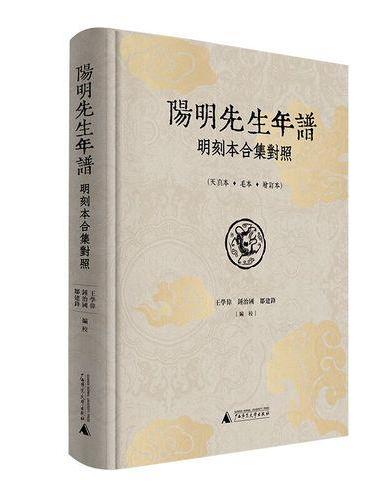
《
《阳明先生年谱》明刻本合集对照
》
售價:NT$
653

《
女人30+,养气血、调脾胃、防衰老(北京卫视《养生堂》《我是大医生》特邀中医养生专家第七批名老中医沈
》
售價:NT$
286

《
征服新世界:西班牙全球帝国之路,1493—1898
》
售價:NT$
449

《
不纠结了 摆脱选择焦虑的极简法则 高敏感、优柔寡断、总陷入选择内耗的 纠结星人 自救指南
》
售價:NT$
254

《
当战争来敲门(牛津二战史,耶鲁、剑桥大学教授推荐)
》
售價:NT$
449
|
| 內容簡介: |
本书系统论述了电力电子系统瞬态过程理论和应用,内容包括:梳理和认识电力电子系统的结构和属性;电力电子系统中电磁瞬态过程及其建模;功率开关器件瞬态特性、瞬态换流拓扑及其杂散参数和基于器件特性的系统安全工作区;电磁瞬态过程的量测、主电路电磁脉冲及其序列和高性能闭环控制及其限制;瞬态电磁能量平衡控制策略基本原理与控制方法;电磁瞬态分析在典型电力电子系统中的应用。
本书可供从事电力电子领域工作,特别是从事大容量电力电子系统研究、装置开发和工程应用的专业人士参考,也可供高校相关专业教师和研究生参考。
|
| 關於作者: |
|
赵争鸣,主要从事电力电子与电力传动、电机系统及其控制、大容量高压变频器与太阳能光伏发电等研究工作。先后在国际学术刊物、国际会议以及核心刊物上发表120多篇有关学术,其中,其中SCI收录10篇,EI源刊58篇,ISTP10篇。参与编著《中国电力大百科全书》。98年获教育部科技进步奖三等(完),2000年获中国高校科技奖一等(完)先后获六项国家专利(发明人)。
|
| 目錄:
|
1 Introduction
1.1 Decomposition of Power Electronics Systems
1.1.1 Power Semiconductor Devices
1.1.2 Power Conversion Circuit
1.1.3 Pulse Control
1.2 Synthesis of Power Electronics Systems
1.2.1 Integration of Software and Hardware
1.2.2 Interaction Between Information and Energy
1.2.3 Transfer Between Linearity and Non-linearity
1.2.4 Mixture of Continuity and Discreteness
1.2.5 Coordination of Multi-timescale Subsystems
1.3 Applications of Power Electronics Systems
1.3.1 Flexible AC or DC Current Transmission
1.3.2 Power Electronic Systems in Grid-Tied Renewable
Energy Generation
1.3.3 Traction System
1.4 Existing Challenges in Power Electronics Systems
1.4.1 Misunderstanding the Short-Timescale Switching
Process of Power Switches
1.4.2 Idealization of Power-Conversion Topology
for Transient Study.
1.4.3 Unrecognizing the Difference Between Information
Pulses and Energy Pulses
1.4.4 Misidentifying Electromagnetic Transients
2 Electromagnetic Transients and Modelling
2.1 Electromagnetic Transients of Power Electronics Systems
2.1.1 Electromagnetic Transients in the Main-Power Loop
2.1.2 Electromagnetic Transients in the Gate-Drive Loop
2.1.3 Electromagnetic Transients in the Control Loop
2.2 Mathematical Models of Electromagnetic Transients
2.2.1 Modelling Electromagnetic Transients
2.2.2 Transient Model of the Main-Power Loop
2.2.3 Transient Models of Electric Components
2.2.4 Transients Model of Gate-Drive and Control Circuits
2.3 Timescale Difference and Impact
2.3.1 Comparison of Different Time-Scale Transients
2.3.2 Correlations Among Different Time-Constant Loops.
2.3.3 Impact of the Time-Constant Difference.
2.3.4 Loop-Parameter Matching for Energy Balancing
2.4 Electromagnetic Pulses and Pulse Sequences
2.4.1 Mathematical Expression of the Electromagnetic
Pulses and Pulse Sequences
2.4.2 Propagation and Deformation of the Pulse
and Pulse Sequence
2.4.3 Time and Logic Combination of Pulse Sequence
3 Transient Characteristics of Power Switches.
3.1 Physical Mechanism and Characteristics of Power Switches
3.1.1 Physical Mechanism Versus the Switching
Characteristics
3.1.2 Different Characteristics of Different Semiconductor-
Physics Based Power Devices
3.2 Transient Performance Testing of the Power Switch
in the Converter
3.2.1 Topology and Control of the Single-Switch Tester
3.2.2 Stand-Alone Tester for Single-Switch Dynamics
3.2.3 Transient Characteristics of a Single Switch
in the Converter
3.3 Transient Performance Analysis of Power Devices
in the Converter
3.3.1 Switch Performance During the Operation
3.3.2 Interactions Among Switches
3.4 Power Devices in Parallel Connection
3.4.1 Key Influential Factors on the Switch Parallel
3.4.2 Performance Analysis of Paralleled IGBTs.
3.4.3 Experimental Study of IGBT Parallel
3.5 Power Devices in Series Connection
3.5.1 Fundamentals of the Switches in Series Connection.
3.5.2 IGCTs in Series Connection
4 Transient Commutation Topology and Its Stray Parameters
4.1 Definition of the TCT
4.1.1 Definition of the Converter Topology
4.1.2 Converter Transient Commutation Topology
4.2 Extractions of Stray Parameters in Complex Main Circuits
4.2.1 Comparison of Extraction Approaches
4.2.2 Accuracy Analysis of PEEC
4.2.3 Simplification of Stray-Parameter Extractions
in the Complex Structures
4.3 Analysis of Stray Parameters in IGBT Based Converters
4.3.1 Impact of Stray Parameters on the IGBTs
in the Power Converter
4.3.2 Modelling of DC Bus Bars in the IGBT Based
Converter
4.4 Analysis of Stray Parameters in IGCT Based Converters
4.4.1 Modelling of DC Bus Bars in a Three-Level IGCT
Converter
4.4.2 Transient Commutation Topology
4.5 Quantitative Analysis and Optimization of Stray Parameters
4.5.1 Evaluation of Stray Parameters in the IGBT Module
Based Converter
4.5.2 Bus-Bar Optimization for an IGBT Module Based
Converter
4.5.3 Evaluation of the Stray Parameters in Clamping
|
|

 購物車/收銀台(0) | 在線留言板
| 付款方式
| 聯絡我們
| 運費計算
| 幫助中心 |
加入書簽
購物車/收銀台(0) | 在線留言板
| 付款方式
| 聯絡我們
| 運費計算
| 幫助中心 |
加入書簽 HOME
HOME 新書上架
新書上架


