新書推薦:
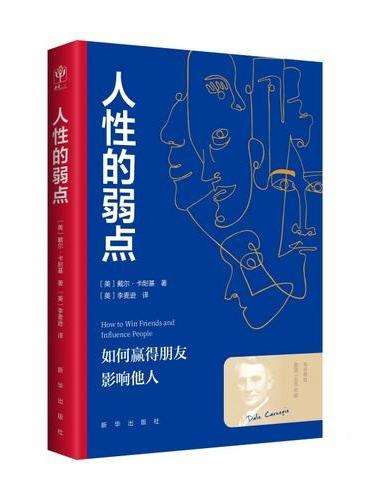
《
人性的弱点
》
售價:NT$
245

《
今日私法理论:德国私法理论的多元视角(德语法学思想译丛)
》
售價:NT$
434

《
敦煌简史
》
售價:NT$
1826

《
人性的优点
》
售價:NT$
245
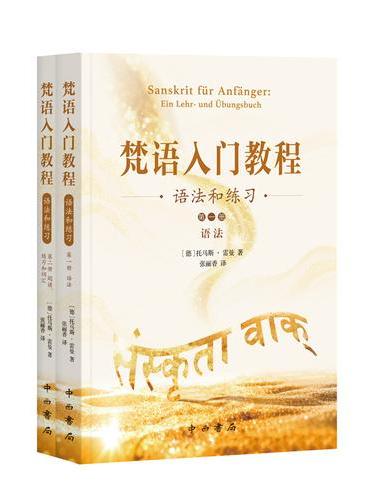
《
梵语入门教程:语法和练习(全二册)
》
售價:NT$
1367

《
汉初十年 刘邦与吕氏家族 32幅图表清晰标注关键战役人事布局
》
售價:NT$
281
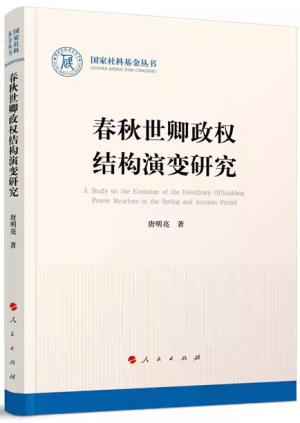
《
春秋世卿政权结构演变研究
》
售價:NT$
398

《
幸福家庭的法律密码
》
售價:NT$
347
|
| 目錄:
|
|
ContentsPreface to the Third Edition vPreface to the Second Edition viiPreface to the First Edition ixGlossary of Symbols xiIntroduction 1A. Prime Numbers 3A1. Prime values of quadratic functions. 7 A2. Primes connected with factorials. 10 A3. Mersenne primes. Repunits. Fermat numbers. Primes of shape k . 2n + 1. 13 A4. The prime number race. 22 A5. Arithmetic progressions of primes. 25 A6. Consecutive primes in A.P.28 A7. Cunningham chains. 30 A8. Gaps between primes. Twin primes. 31 A9. Patterns of primes. 40 A10. Gilbreath‘s conjecture. 42 A11. Increasing and decreasing gaps. 43 A12. Pseudoprimes. Euler pseudoprimes. Strong pseudoprimes. 44 A13. Carmichael numbers. 50 A14. ”Good” primes and the prime number graph. 54 A15. Congruent products of consecutive numbers. 54 A16. Gaussian and Eisenstein-Jacobi primes. 55 A17. Formulas for primes. 58 A18. The Erd?s-Selfridge classification of primes. 66 A19. Values of n making n - 2k prime. Odd numbers not of the form ±pα±2b . 67 A20. Symmetric and asymmetric primes. 69B. Divisibility 71B1. Perfect numbers. 71 B2. Almost perfect, quasi-perfect, pseudoperfect, harmonic, weird, multiperfect and hyperperfect numbers. 74 B3. Unitary perfect numbers. 84 B4. Amicable numbers. 86 B5. Quasi-amicable or betrothed numbers. 91 B6. Aliquot sequences. 92 B7. Aliquot cycles. Sociable numbers. 95 B8. Unitary aliquot sequences. 97 B9. Superperfect numbers. 99 B10. Untouchable numbers. 100 B11. Solutions of mσ (m) = nσ(n). 101 B12. Analogs with d(n) σk(n). 102 B13. Solutions of σ (n) = σ (n + 1). 103 B14. Some irrational series. 104 B15. Solutions of σ (q) + σ (r) = σ (q + r). 105 B16. Powerful numbers. Squarefree numbers. 105 B17. Exponential-perfect numbers 110 B18. Solutions of d(n) = d(n+1).111 B19. (m,n+1) and (m+1,n) with same set of prime factors. The abc-conjecture. 113 B20. Cullen and Woodall numbers. 119 B21. k . 2π+ 1 composite for all n. 119 B22. Factorial n as the product of n large factors. 122 B23. Equal products of factorials. 123 B24. The largest set with no member dividing two others. 124 B25. Equal sums of geometric progressions with prime ratios. 124 B26. Densest set with no l pairwise coprime. 125 B27. The number of prime factors of n + k which don’t divide n + i, 0≤i < k. 126 B28. Consecutive numbers with distinct prime factors. 126 B29. 1s x determined by the prime divisors of x + 1, x + 2, , x + k 127 B30. A small set whose product is square. 128 B31. Binomial coefficients. 129 B32. Grimm‘s conjecture. 133 B33. Largest divisor of a binomial coefficient. 134 B34. If there’s an I such that n - i divides (nk). 137 B35. Products of consecutive numbers with the same prime factors. 137 B36. Euler‘s totient function. 138 B37. Does 4>(n) properly divide n - 1 142 B38. Solutions of *(m) = σ (n). 144 B39. Carmichael’s conjecture. 144 B40. Gaps between totatives. 146 B41. 1terations of 4> and σ.147 B42. Behavior of *(σ (n)) and σ(4) (n)). 150 B43. Alternating sums of factorials . 152 B44. Sums of factorials. 153 B45. Euler numbers. 154 B46. The largest prime factor of n. 154 B47. When does 2a - 2b divide nα-η b 155 B48. Products taken over primes. 155 B49. Smith numbers. 156 B50. Ruth-Aaron numbers. 157C. Additive Number Theory 159C1. Goldbach‘s conjecture. 159 C2. Sums of consecutive primes. 164 C3. Lucky numbers. 164 C4. Ulam numbers. 166 C5. Sums determining members of a set. 167 C6. Addition chains. Brauer chains. Hansen chains. 169 C7. The money-changing problem. 171 C8. Sets with distinct sums of subsets. 174 C9. Packing sums of pairs. 175 C10. Modular difference sets and error correcting codes. 181 C11. Three-subsets with distinct sums. 184 C12. The postage stamp problem. 185 C13. The corresponding modular covering problem. Harmonious labelling of graphs. 190 C14. Maximal sum-free sets. 191 C15. Maximal zerφsum-free sets. 193 C16. Nonaveraging sets. Nondividing sets. 198 C17. The minimum overlap problem. 199 C18. The n queens problem. 200 C19. 1s a weakly indedendent sequence the finite union of strongly independent ones 203 C20. Sums of squares. 204 C21. Sums of higher powers. 207D. Diophantine Equations 209D 1. Sums of like powers. Euler’s conjecture. 209 D2. The Fermat problem. 218 D3. Figurate numbers. 222 D4. Waring‘s problem. Sums of l kth Powers. 229 D5. Sum of four cubes. 231 D6. An elementary solution of x2 = 2y4- 1. 234 D7. Sum of consecutive powers made a power. 235 D8. A pyramidal diophantine equation. 237 D9. Catalan conjecture. Difference of two powers. 238 DI0. Exponential diophantine equations. 242 D11. Egyptian fractions. 252 D12. Markoff numbers. 263 D13. The equation xxyy= zz. 265 D14. ai+ bj made squares. 266 D15. Numbers whose sums in pairs make squares. 268 D16.τ’riples with the same sum and same product. 271 D17. Product of blocks of consecutive integers not a power. 272 D18. Is there a perfect cuboid Four squares whose sums in pairs are square. Four squares whose diffe
|
| 內容試閱:
|
|
Introduction Number theory has fascinated both the amateur and the professional for a longer time than any other branch of mathematics, so that much of it is now of considerable technical difficulty. However, there are more unsolved problems than ever before, and though many of these are unlikely to be solved in the next generation, this probably won‘t deter people from trying. They are so numerous that they have already filled more than one volume: the present book is just a personal sample. Some good sources of problems in number theory were listed in the Introduction to the first edition, some of which are repeated here, along with more recent references. Paul Erdos, Problems and results in combinatorial number theory 111, Springer Lecture Notes in Math, 626(1977) 43-72; MR 57 #12442. Paul Erdos, A survey of problems in combinatorial number theory, in Combinatorial Mathematics, Optimal Designs and their Applica tions (Proc. Symp. Colo. State Univ. 1978) Ann. Discrete Math, 6(1980) 89- 115. P. Erdos, Problems and results in number theory, in Halberstam & Hooley (eds) Recent Progress in Analytic Number Theory, Vol. 1, Academic Press, 1981, 1- 13. Paul Erdos, Problems in number theory, New Zealand J. Math. , 26(1997) 155-160. Paul Erdos, Some of my new and almost new problems and results in combinatorial number theory, Number Theory(Eger) , 1996, de Gruyter, Berlin, 1998, 169-180. P. Erdos & R. L. Graham, Old and New Problems and Results in Combinatorial Number Theory, Monographies de l’Enseignement Math. No. 28, Geneva, 1980. (spelling) Pal Erdos & Andras Sarkozy, Some solved and unsolved problems in combinatorial number theory, Ma, th. Slovaca, 28(1978) 407- 421; MR 80i:10001 Pal Erdos & Andras Sarkozy, Some solved and unsolved problems in combinatorial number theory II, Colloq. Math. , 65 (1993) 201- 211; MR 99j:11012. H. Fast & S. Swierczkowski, The New Scottish Book, Wroclaw, 1946- 1958. Heini Halberstam, Some unsolved problems in higher arithmetic, in Ronald Duncan & Miranda Weston-Smith (eds.) The Encyclopaedia olIgnorance, Pergamon, Oxford & New York, 1977, 191- 203. I. Katai, Research problems in number theory, Publ. Math. Debrecen, 24(1977) 263- 276; MR 57 #5940; 11, Ann. Univ. Sci. Budapest. Sect. Comput., 16(1996) 223- 251; MR 98m:11002. Victor Klee & Stan Wagon, Old and New Unsolved Pmblems in PIane Geometry and Number Theory, Math. Assoc. of Amer. Dolciani Math. Expositions, 11(1991). Pmceedings of Number Theory Conference, Univ. of Colorado, Boulder, 1963 Report of Iηstitute in the Theory of Numbers, Univ. of Colorado, Boulder, 1959. Joe Roberts, Lure of the Integers, Math. Assoc. of America, Spectrum Series, 1992; MR 94e:00004. Andras Sarkozy, Unsolved problems in number theory, Period. Math. Hungar 42(2001) 17- 35; MR 2002i:11003. Daniel Shanks, Solved and Unsolved Problems in Number Theory, Chelsea, New York, 2nd ed. 1978; MR 80e:10003. W. Sierpinski, A selection of Pmblems in the Theory of Numbers, Pergamon, 1964. Robert D. Silverman, A perspective on computational number theory, in Computers and Mathematics, Notices Amer. Ma th. Soc. , 38(1991) 562- 568. S. Ulam, A Collection of Ma thematical Pmblems, Interscience, New York, 1960. Throughout this volume, ”number” means natural number, i.e., 0, 1, 2, and c is an absolute positive constant, not necessarily taking the same value at each appearance. We use K. E. Iverson‘s symbols (popularized by Donald Knuth) ” greater than” and ”the least integer not less than.’ A less familiar symbol may be ”m⊥n” for ”m is prime to n” or ”gcd(m,n)= 1.\ The book is partitioned, somewhat arbitrarily at times, into six sections: A. Prime numbers B. Divisibility C. Additive number theory D. Diophantine equations E. Sequences of integers F. None of the above. A. Prime Numbers We can partition the positive integers into three classes: the unit 1 the primes 2, 3, 5, 7, 11, 13, 17, 19, 23, 29, 31, 37, . the composite numbers 4, 6, 8, 9, 10, 12, 14, 15, 16, . A number greater than 1 is prime if its only positive divisors are 1 and itself; otherwise its composite. Primes have interested mathematicians at least since Euclid, who showed that there are infinitely many. The largest prime in the Bible is 22273 at Numbers, 3 xliii. The greatest common divisor (gcd) of m and n is denoted by (m , n), e.g., (36,66) = 6, (14, 15) = 1, (1001, 1078) = 77. If (m , η) = 1, we say that m and n are coprime and write m j_ n; for example 182 j_ 165. Denote the n-th prime by Pn , e.g. Pl = 2, P2 = 3, P99 = 523; and the number of primes not greater than x by π(x) , e . g. , π(2) = 1 , π(3*1/2) = 2, π(1000) = 168 , π(4.10 16 ) = 1075292778753150. The table on the next page is an extension of that on p. 146 of Conway & Guy, The Book of Numbers, and compares
|
|

 購物車/收銀台(0) | 在線留言板
| 付款方式
| 聯絡我們
| 運費計算
| 幫助中心 |
加入書簽
購物車/收銀台(0) | 在線留言板
| 付款方式
| 聯絡我們
| 運費計算
| 幫助中心 |
加入書簽 HOME
HOME 新書上架
新書上架


