新書推薦:

《
百年星辰:寻找现代中国的大师
》
售價:NT$
500

《
情绪的真相:关于情绪的内在力量
》
售價:NT$
347

《
偷偷啃月亮
》
售價:NT$
234
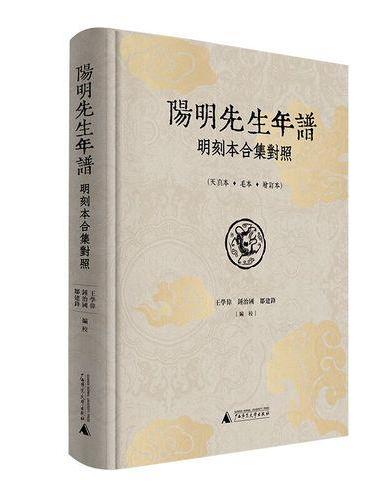
《
《阳明先生年谱》明刻本合集对照
》
售價:NT$
653

《
女人30+,养气血、调脾胃、防衰老(北京卫视《养生堂》《我是大医生》特邀中医养生专家第七批名老中医沈
》
售價:NT$
286

《
征服新世界:西班牙全球帝国之路,1493—1898
》
售價:NT$
449

《
不纠结了 摆脱选择焦虑的极简法则 高敏感、优柔寡断、总陷入选择内耗的 纠结星人 自救指南
》
售價:NT$
254

《
当战争来敲门(牛津二战史,耶鲁、剑桥大学教授推荐)
》
售價:NT$
449
|
| 內容簡介: |
|
《李群和李代数》共3本,由该领域国际权威的专家撰写,涵盖了该领域所有重要的方向和理论,内容非常全面,有很高的参考价值。
|
| 目錄:
|
|
ContentsIntroduction 4Chapter 1. Basic Notions 6§1. Lie Groups, Subgroups and Homomorphisms 61.1 Definition of a Lie Group 61.2 Lie Subgroups 71.3 Homomorphisms of Lie Groups 91.4 Linear Representations of Lie Groups 91.5 Local Lie Groups 11§2. Actions of Lie Groups 122.1 Definition of an Action 122.2 Orbits and Stabilizers 122.3 Images and Kernels of Homomorphisms 142.4 Orbits of Compact Lie Groups 14§3. Coset Manifolds and Quotients of Lie Groups 153.1 Coset Manifolds 153.2 Lie Quotient Groups 173.3 The Transitive Action Theorem and the Epimorphism Theorem 183.4 The Pre-image of a Lie Group Under a Homomorphism 183.5 Semidirect Products of Lie Groups 19§4. Connectedness and Simply-connectedness of Lie Groups 214.1 Connected Components of a Lie Group 214.2 Investigation of Connectedness of the Classical Lie Groups 224.3 Covering Homomorphisms 244.4 The Universal Covering Lie Group 264.5 Investigation of Simply-connectedness of the Classical Lie Groups 27Chapter 2. The Relation Between Lie Groups and Lie Algebras 29§1. The Lie Functor 291.1 The Tangent Algebra of a Lie Group 291.2 Vector Fields on a Lie Group 311.3 The Differential of a Homomorphism of Lie Groups 321.4 The Differential of an Action of a Lie Group 341.5 The Tangent Algebra of a Stabilizer 351.6 The Adjoint Representation 35§2. Integration of Homomorphisms of Lie Algebras 372.1 The Differential Equation of a Path in a Lie Group 372.2 The Uniqueness Theorem 382.3 Virtual Lie Subgroups 382.4 The Correspondence Between Lie Subgroups of a Lie Group and Subalgebras of Its Tangent Algebra 392.5 Deformations of Paths in Lie Groups 402.6 The Existence Theorem 412.7 Abelian Lie Groups 43§3. The Exponential Map 443.1 One-Parameter Subgroups 443.2 Definition and Basic Properties of the Exponential Map 443.3 The Differential of the Exponential Map 463.4 The Exponential Map in the Full Linear Group 473.5 Cartan’s Theorem 473.6 The Subgroup of Fixed Points of an Automorphism of a Lie Group 48§4. Automorphisms and Derivations 484.1 The Group of Automorphisms 484.2 The Algebra of Derivations 504.3 The Tangent Algebra of a Semi-Direct Product of Lie Groups 51§5. The Commutator Subgroup and the Radical 525.1 The Commutator Subgroup 525.2 The Malcev Closure 535.3 The Structure of Virtual Lie Subgroups 545.4 Mutual Commutator Subgroups 555.5 Solvable Lie Groups 565.6 The Radical 575.7 Nilpotent Lie Groups 58Chapter 3. The Universal Enveloping Algebra 59§1. The Simplest Properties of Universal Enveloping Algebras 591.1 Definition and Construction 601.2 The Poincaré-Birkhoff-Witt Theorem 611.3 Symmetrization 631.4 The Center of the Universal Enveloping Algebra 641.5 The Skew-Field of Fractions of the Universal Enveloping Algebra 64§2. Bialgebras Associated with Lie Algebras and Lie Groups 662.1 Bialgebras 662.2 Right Invariant Differential Operators on a Lie Group 672.3 Bialgebras Associated with a Lie Group 68§3. The Campbell-Hausdorff Formula 703.1 Free Lie Algebras 703.2 The Campbell-Hausdorff Series 713.3 Convergence of the Campbell-Hausdorff Series 73Chapter 4. Generalizations of Lie Groups 74§1. Lie Groups over Complete Valued Fields 741.1 Basic Definitions 741.2 Valued Fields and Examples 751.3 Actions of Lie Groups 751.4 Standard Lie Groups over a Non-archimedean Field 761.5 Tangent Algebras of Lie Groups 76§2. Formal Groups 782.1 Definition and Simplest Properties 782.2 The Tangent Algebra of a Formal Group 792.3 The Bialgebra Associated with a Formal Group 80§3. Infinite-Dimensional Lie Groups 803.1 Banach Lie Groups 813.2 The Correspondence Between Banach Lie Groups and Banach Lie Algebras 823.3 Actions of Banach Lie Groups on Finite-Dimensional Manifolds 833.4 Lie-Frechet Groups 843.5 ILB- and ILH-Lie Groups 85§4. Lie Groups and Topological Groups 864.1 Continuous Homomorphisms of Lie Groups 874.2 Hilbert’s 5-th Problem 87§5. Analytic Loops 885.1 Basic Definitions and Examples 885.2 The Tangent Algebra of an Analytic Loop 895.3 The Tangent Algebra of a Diassociative Loop 905.4 The Tangent Algebra of a Bol Loop 91References 92
|
| 內容試閱:
|
|
Introduction The theory of Lie groups, to which this volume is devoted, is one of the classical well established chapters of mathematics. There is a whole series of monographs devoted to it (see, for example, Pontryagin 1984, Postnikov 1982, Bourbaki 1947, Chevalley 1946, Helgason 1962, Sagle and Walde 1973,Serre 1965, Warner 1983). This theory made its first appearance at the end of the last century in the works of S. Lie, whose aim was to apply algebraic methods to the theory of differential equations and to geometry. During the past one hundred years the concepts and methods of the theory of Lie groups entered into many areas of mathematics and theoretical physics and became inseparable from them. The first three chapters of the present work contain a systematic exposition of the foundations of the theory of Lie groups. We have tried to give here brief proofs of most of the more important theorems. Certain more complex theorems, not used in the text, are stated without proof. Chapter 4 is of a special character: it contains a survey of certain contemporary generalizations of Lie groups. The authors deliberately have not touched upon structural questions of the theory of Lie groups and algebras, in particular, the theory of semi-simple Lie groups. To these questions will be devoted a separate study in one of the future volumes of this series. In this entire work Lie groups, as a rule, will be denoted with capital Latin letters, and their tangent algebras with the corresponding small Gothic letters, In addition the following notation will be used: G° - connected component of the identity of a Lie group (or a topological group) G G‘ = (G,G) - the commutator subgroup of a group G; G’‘ = (G’) ); Rad G - the radical of a Lie group G; rad g - the radical of a Lie algebra g; the semidirect product of groups (normal subgroup on the left); the semidirect sum of Lie algebras (ideal on the left); T - the group of complex numbers of modulus 1; exp - the exponential mapping; Ad - the adjoint representation of a Lie group; ad - the adjoint representation of a Lie algebra; Aut A - the group of automorphisms of a group or algebra A; Int G - the group of inner automorphisms of a group G; Der A - the Lie algebra of derivations of an algebra A; Int g - the group of inner automorphisms of a Lie algebra g; GL(V) - the group of all automorphisms (invertible linear transforma-tions) of a vector space V; Ln(K) - the associative algebra of all square matrices of order n over a field K; GLn(K) - the group of all non singular matrices of order n over K; SLn(K) - the group of all matrices of order n with determinant 1; PGLn(K) = GLn(K)/{λE - the projective linear group; GLn+ (R) - the group of all real matrices of order n with positive determi-nant; On(K) - the group of all orthogonal matrices of order n over K; SOn(K) = On(K) ∩ SLn(K); Spn(K) - the group of all symplectic matrices of order n over K (n even); Ok,l - the group of all pseudo-orthogonal real matrices of signature (k,l); SOk,l = Ok,l ∩ SLk+l(R); l - the group of pseudo-orthogonal matrices of signature (k,l) whose minor of order k at the top left corner is positive; Un - the group of unitary complex matrices of order n; Uk,l - the group of pseudo-unitary complex matrices of signature; Finally we would like to mention a piece of non-standard terminology: we use the term “the tangent algebra of a Lie group” instead of the usual “the Lie algebra of a Lie group”. We do so with a view to emphasise the construction of this Lie algebra as the tangent space to the Lie group. This seems to be appropriate here since, in particular, the tangent algebra of an analytic loop is not, in general, a Lie algebra. We reserve the term “Lie algebra” for its algebraic context. Chapter 1 Basic Notions We will assume familiarity with the basic concepts of manifold theory.However in order to avoid misunderstanding some of them will be defined in the text. The basic field, by which we mean either the field R of real numbers or the field C of complex numbers, will be denoted by K. Unless stated oth-erwise, differentiability of functions will be understood in the following sense:in every case there exist as many derivatives as are needed. Differentiability of manifolds and maps is understood in the same sense. The Jacobian matrix of a system of differentiable functions , of variables, will be denoted by. For m = n its determinant will be denoted by. The tangent space of a manifold X at a point x will be denoted by and the differential of a map f : at a point x by f. In many cases,when it is clear which point is being considered, the subscript will be omitted in denoting a tangent space or a differential. All differentiable manifolds will be assumed to possess a countable base of open sets. §1. Lie G
|
|

 購物車/收銀台(0) | 在線留言板
| 付款方式
| 聯絡我們
| 運費計算
| 幫助中心 |
加入書簽
購物車/收銀台(0) | 在線留言板
| 付款方式
| 聯絡我們
| 運費計算
| 幫助中心 |
加入書簽 HOME
HOME 新書上架
新書上架


