新書推薦:

《
鲁迅与抗日战争--启蒙与救亡(鲁迅文化基金会丛书)
》
售價:NT$
398

《
2045:AI改变人类未来的十大趋势(揭示未来二十年超级震撼的科技变革全景图)
》
售價:NT$
347

《
新知文库精选·骆驼来自何处:外来入侵物种的故事与科学
》
售價:NT$
352

《
沟通:终身原则(第八版)
》
售價:NT$
1010

《
小狗心理疗愈日记 史努比陪你找到自我主体性 走出艰难时刻
》
售價:NT$
214

《
心灵银行 脑科学轻松创造真正的改变 世界级催眠大师约翰卡帕斯送给普通人改写命运的秘密武器
》
售價:NT$
347
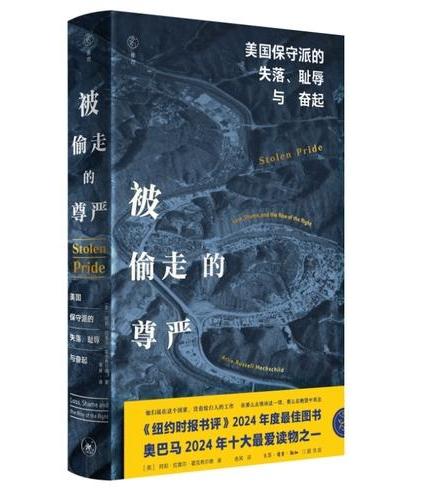
《
被偷走的尊严:美国保守派的失落、耻辱与奋起(三联·哈佛燕京学术丛书)
》
售價:NT$
398

《
尖叫的数学:令人惊叹的数学之美:修订新版(从数学的角度发现不一样的逻辑和处世哲学。随书附赠手账本。)
》
售價:NT$
296
|
| 內容簡介: |
《超重力反应工程》是一本极具权威性与实用性的综合性参考书籍,系统且全面地呈现了超重力反应工程的基本原理及其在工业领域的广泛应用。书中从分子化学工程视角出发,深入剖析 超重力反应过程强化的科学内涵、核心原理、实施方法及实际应用场景,构建起从微观分子到宏观工厂应用的完整知识体系。同时,对超重力反应器的流体动力学行为、设计准则与方法,以及新型多相反应过程和反应结晶技术进行了重点阐释。??
本书融合多学科知识,内容丰富,适用于化学工程、能源化学工程、化工机械、环境工程和材料工程等领域的科研人员、技术工作者、教师和学生参考。
|
| 關於作者: |
|
陈建峰 中国工程院院士,北京化工大学教授、博士生导师。长期从事纳米材料和超重力技术领域的研究。在国际上率先提出并开拓了超重力反应工程新领域,并实现大规模工业应用,为我国超重力技术由合作跟踪到国际工业引 领的转变做出了突出贡献。作为第 一完成人,获国家技术发明奖二等奖2项、国家科技进步奖二等奖1项,另作为主要完成人获国家技术发明奖二等奖、国家专利金奖和国家 级教学成果奖一等奖各1项等。
|
| 目錄:
|
1. Introduction to high-gravity reaction engineering 1
1.1 Introduction to chemical reaction engineering 1
1.2 High-gravity intensification technology 2
1.3 High-gravity reaction engineering 5
1.4 Future development 12
References 16
2. Hydrodynamic behavior in high-gravity reactors 19
2.1 Phenomena and description of fluid flow in high-gravity reactors 19
2.2 Characteristic parameters of fluid flow in high-gravity reactors 23
2.3 Liquid holdup in high-gravity reactors 39
2.4 The residence time of liquid in high-gravity reactors 45
References 47
3. Design principles and methods of high-gravity reactors 49
3.1 General design information of high-gravity reactors 49
3.2 Structural design of high-gravity reactors 51
3.3 High-gravity reactor power calculation 56
3.4 High-gravity reactor structure 57
References 65
4. Liquid-liquid reaction system enhancement by high-gravity technology and engineering application 67
4.1 Molecular mixing and its modeling 68
4.2 Enhancement of high-gravity condensation reaction and industrial application 85
4.3 Enhancement of high-gravity sulfonation reaction and industrial application 94
4.4 High-gravity enhanced polymerization 106
4.5 Enhancement of high-gravity alkylation reaction 115
4.6 Enhanced halogenation reaction by high-gravity technology 126
References 138
5. Reaction enhancement and industrial application of high-gravity technology in gas-liquid system 141
5.1 Mass transfer behavior and modeling in high-gravity reactors 142
5.2 High-gravity reaction absorption technology 158
5.3 High-gravity enhanced reaction and separation coupling technology 191
5.4 High-gravity oxidation reaction technology 195
References 201
6. High-gravity reaction engineering of gas-solid system 207
6.1 Visualization of hydrodynamic characteristics of gas-solid multiphase system in high-gravity reactors 208
6.2 CFD simulation of gas-phase flow in RPBs 219
6.3 Research and application of high-gravity catalytic reaction in gas-solid system 243
References 255
7. High-gravity reaction engineering of gas-liquid-solid system 257
7.1 CO2 absorption in K2CO3/KHCO3 solution enhanced by the organic phase in high-gravity reactors 258
7.2 α-Methylstyrene (AMS) catalytic hydrogenation under high-gravity environment 266
7.3 Hydrogen peroxide production by the high-gravity anthraquinone process 268
7.4 High-gravity catalytic oxidation for sulfur removal 274
7.5 High-gravity biochemical reaction 279
References 288
8. High-gravity reactive crystallization and its industrial application 291
8.1 Basic principles of nanomaterial preparation by high-gravity reactive crystallization 293
8.2 Preparation of nanopowders by gas-liquid-solid high-gravity reactive crystallization 296
8.3 Nanopowder preparation by gas-liquid high-gravity reactive crystallization 303
8.4 Nanopowder preparation by liquid-liquid high-gravity reactive crystallization 311
8.5 Scale production of nanopowders by high-gravity method 326
8.6 Preparation and application of nanodispersions by high-gravity reactive crystallization and extractive phase transfer 328
References 350
Index 355
|
| 內容試閱:
|
Preface
As a scientific discipline focusing on industrial reaction processes, reaction engineering mainly covers theories and methodologies related to the development of reaction technology,the optimization of reaction processes, reactor design, and industrial scale-up. It plays a vital role in the development of various process industries, such as chemical, metallurgical,materials, light industry, and pharmaceuticals. However, with increasing concern about global resources, energy, environment, health, and other issues, the sustainable development of process industries is facing enormous challenges. In particular,the process of material transformation involves a large number of complex and rapid reactions limited by mixing/transfer rates, but these rates and their distribution in reactors are changed due to industrial scale-up, resulting in reduced reaction selectivity and target product yield (including affected product quality). The high consumption of materials and energy as well as severe environmental pollution are also observed as negative effects.
Therefore, it is necessary to develop the theories of molecular reaction engineering as well as new methods, technologies, and processes for industrial application from molecules to industrial units to enrich this discipline and improve the quality, efficiency, energy savings, environmental friendliness, and sustainability of the process industry.
Originating from the US aerospace industry, high-gravity (Higee) technology is a typical process intensification technology. In 1979, Dr. Ramshaw et al. of Imperial Chemical Industries proposed the concept of Higee, which marked the birth of high-gravity process intensification technology. On earth, a high-gravity environment is usually achieved by using a rotating packed bed, a typical high-gravity device mainly composed of a rotor and a shell. The rotation of the rotor generates a strong shear force, which can break up the liquid flowing through the rotor packing into small droplets, liquid films, and liquid filaments. This increases the effective interfacial area and interface renewal rate, thereby enhancing the interphase mass transfer.
In 1988, Prof. Zheng Chong, a former member of the Research Center of the Ministry of Education for High-Gravity Engineering and Technology (hereafter referred to as the Center for High Gravity) at the Beijing University of Chemical Technology (BUCT), cooperated with Case Western Reserve University to research Higee technology and separation techniques. In 1994, Dr. Jian-Feng Chen, now a member of the Chinese Academy of Engineering, proposed a new idea of strengthening the molecular mixing and reaction process using Higee based on his theoretical research on the molecular mixing (also called micromixing) reaction process. Over more than 20 years of systematic and innovative studies, Prof. Chen’s team has created a new direction for Higee reaction engineering. Through cooperation with enterprises, his team has successfully realized the application of HiGee technology in large industrial units of process industries that include chemical, new material, marine engineering, and environmental engineering. This has led to significant energy savings, reduced emissions, improved product quality, and increased production efficiency. Through the joint efforts of two generations of scientific researchers at the BUCT HiGee group, development from a cooperative follower to an industrial leader has been realized.
This book aims to properly guide the research and development as well as industrial application of high-gravity reaction intensification technology through the systematic introduction of the basic principles of high-gravity reaction engineering and its industrial application results. We hope that the publication of this book will promote energy conservation, emission reductions, and the green growth of process industries in China.
The book was completed collectively by the BUCT HiGee group led by Prof. JianFeng Chen. Jian-Feng Chen was responsible for designing the structure of the book, drawing up an outline, setting the writing requirements, and coordinating and finalizing the manuscript. Jian-Feng Chen, Bao-Chang Sun, Yong Luo, and Liang-Liang Zhang revised, translated and proofread the book, and Guang-Wen Chu, Hai-Kui Zou, Xiao-Fei Zeng, and Jie-Xin Wang participated in the translation.
The book systematically and comprehensively introduces and discusses the principles, research progress, and typical industrial application cases of high-gravity reaction engineering, which can help engineers and technicians to scientifically select a suitable technical route of reaction enhancement. This book consists of eight chapters: Chapter 1 focuses on the basic principles, characteristics, and advantages of high-gravity reaction enhancement technology as well as its development history, application scope, industrial results, and development prospects. Chapter 2 features the fluid flow phenomena in reactors and thits description methods, hydrodynamic characteristics, fluid holding capacity, residence time, etc. Chapter 3 discusses the general design ideas, structural design methods, and development of high-gravity reactors. Chapter 4 discusses molecular mixing and modeling of high-gravity reactors, the principles and typical industrial applications of high-gravity reaction intensification in liquid systems such as condensation, sulfonation, polymerization, alkylation, halogenation, etc. Chapter 5 discusses the mass transfer behavior in high-gravity reactors as well as the modeling, principles, and typical industrial applications of high-gravity technology in the enhancement of reaction absorption, reactive separation coupling, oxidation, and other gas–liquid systems. Chapter 6 focuses on the hydrodynamic characteristics of gas–solidmultiphase system, a computational fluid dynamics simulation of gas flow, and the research and application of gas–solid catalytic reactions. Chapter 7 features the applications and results of high-gravity technology in gas–liquid-solid reaction intensification, such as catalytic hydrogenation, catalytic oxidation, and biochemical reaction. Chapter 8 covers the basicprinciples of high-gravity reactive crystallization, the preparation of nanopowders by high-gravity reactive crystallization, the preparation of nanodispersions by high-gravity reactive crystallization and extraction phase transfer, and their industrial applications.
This book is intended for undergraduate and graduate students majoring in chemical engineering, materials, environment, energy, biology, and other fields. It is also a reference book for researchers and engineers in relevant industries.
We would like to hear any comments or feedback from you. Thank you!
Jian-Feng Chen
|
|

 購物車/收銀台(0) | 在線留言板
| 付款方式
| 聯絡我們
| 運費計算
| 幫助中心 |
加入書簽
購物車/收銀台(0) | 在線留言板
| 付款方式
| 聯絡我們
| 運費計算
| 幫助中心 |
加入書簽 HOME
HOME 新書上架
新書上架


