新書推薦:

《
史记 全六册
》
售價:NT$
2030
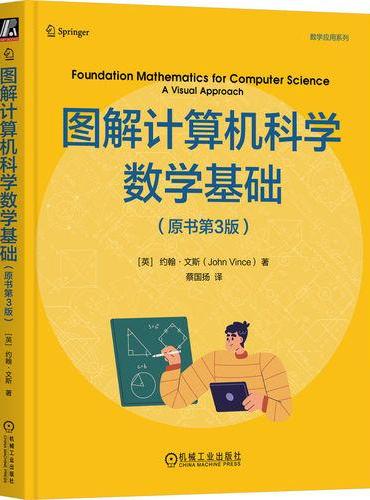
《
图解计算机科学数学基础(原书第3版)
》
售價:NT$
607

《
柏拉图《理想国》指南(想读《理想国》,一直看不懂?这本书就是你的哲学通关攻略)
》
售價:NT$
407

《
你的代谢还好吗:控制“五高”饮食运动法
》
售價:NT$
254

《
战国史料编年辑证(全二册)(杨宽著作集)
》
售價:NT$
1265

《
流动的世界想象:中国当代电影与视觉文化
》
售價:NT$
347
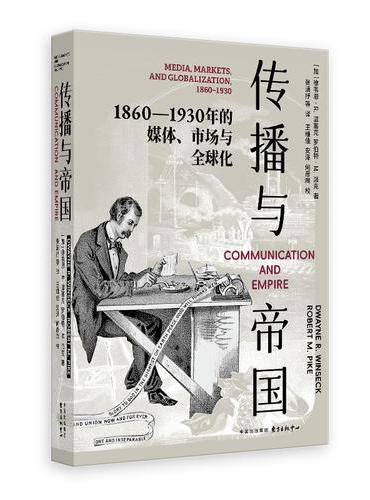
《
传播与帝国:1860—1930 年的媒体、市场与全球化(跨洲史料详尽呈现全球通信全景,资本视角重新定
》
售價:NT$
458

《
不再为他人而活:接纳自我的阿德勒心理学
》
售價:NT$
301
|
| 內容簡介: |
在日益复杂的决策环境中,重大决策失误频发,给国家与组织造成巨大损失。究其根源,情报工作的缺位与失察是关键因素。本书旨在系统性地构建一套科学、有效的“决策失误防范情报保障体系”,致力于将情报工作从传统的被动支持,转变为贯穿决策全流程的主动保障与引领。
本书的核心在于提出并论证了“情报介入”的创新模式,主张情报工作必须深度嵌入“定策、施策、评策”的完整决策链中,从而发挥风险感知、过程控制与纠偏斧正的关键作用。书中详细阐述了该保障体系的五大核心构成要素:以信号分析为基础的风险识别与监控方法、支持全流程的先进情报工作技术、跨部门的协同联动机制、可持续的情报人才培养体系,以及确保体系有效运作的实证化干预机制。
全书融合了前沿理论构建、多领域案例剖析与严谨的实证分析,为各级决策者和情报研究人员有效防范化解风险、提升决策质量提供了兼具学理深度与实践指导价值的系统性方案。
|
| 內容試閱:
|
The quality of decision-making determines the survival and development
of organizations, corporations, and even nations. However, across both business
practice and public administration, costly decision-making failures remain all too
common. From the bankruptcy of the Iridium project, which ignored technological
iteration, to countless initiatives failing due to deviations in implementation, these
failures repeatedly reveal a stark reality.
Are we to follow the traditional, passive service model—providing whatever
decision-makers “need to know”—or break through to proactively address what they
“should know”? For too long, intelligence work has been treated as an accessory to
decision-making: a form of on-demand information support. This subordinate status
has often alienated intelligence work, reducing it to “serving the decision-makers”
(i.e., validating their existing viewpoints) rather than “serving the decision” (i.e.,
providing objective, neutral assessments). The result is the “intelligence blindness”
we frequently observe: critical signals are overlooked, and risk warnings are
dismissed.
It is against this backdrop that the author, Hu Yaping, focused her doctoral
dissertation on intelligence intervention—a proposition of both profound challenge
and practical significance. During her doctoral studies, the author has participated
in several major national research projects, receiving the systematic and rigorous
academic training that established a solid foundation for this work. I am pleased
to see the scholarly diligence she exhibits—being assiduous in thought, keen in
observation, and adept in analysis. She does not shy away from complex problems.
Instead, she confronts the dilemma of intelligence “voicelessness” and “blindness”
in practice, demonstrating the exploratory courage to seek solutions for this
persistent malady. This manuscript is a new work, revised and refined from her
doctoral dissertation.
The author does not settle for superficial amendments to traditional “intelligence
services”. Instead, she targets the crux of the problem, undertaking a profound
re-examination of the role and function of intelligence in decision-making,
and bravely attempting to construct a theoretical and practical framework for
intelligence intervention.
“Intervention”, rather than mere “service”, signifies a shift from passive
response to proactive engagement. It emphasizes the “eyes and ears” function of
intelligence (forecasting, warning, and anticipating); it leverages the “strategic
advisor” role, engaging intelligence throughout the entire process of policy
formulation, implementation, and evaluation; and it embodies the “vanguard”
role, courageously maintaining objective independence, free from interference.
The innovation of this book does not stop at the conceptual level; it lies in its
construction of a complete, progressively layered system for “how to achieve
intervention”.
First, the book clarifies the “stance” of intelligence intervention. The author
posits that an effective intelligence process is the operational foundation for
intervention, while relative independence is the core prerequisite for it to fulfill its
corrective function. The book’s incisive review of the classic Kent-Gates debate
lucidly elucidates the ideal “arm’s length” relationship that must be maintained
between intelligence and decision-makers, providing practitioners with a mandate
for professional autonomy.
Second, the book proposes the “tools” for intelligence intervention: signal
analysis and risk mapping. The author introduces signal analysis theory to decision-
risk identification, shifting the core value of intelligence intervention from
ex-post reflection to ex-ante warning. Particularly valuable is the author’s use
of grounded theory analysis on numerous failed cases to construct a “decisionmaking
failure risk map”. This map comprises four key dimensions: error-inducing
contexts, human factors, process flaws, and information deficits. This is not merely
.
Preface
a significant theoretical synthesis; it provides intelligence personnel with a highly
operational checklist for risk scanning and monitoring.
Third, the book establishes the “platform” for intelligence intervention: a
collaborative mechanism.To address the persistent organizational maladies of data
silos and departmentalism, the author proposes a “four-in-one” (quadripartite)
collaborative model and a “three-dimensional” implementation path. This
framework aims for a “tri-complete” structure: all-source collection, all-hands
participation, and all-process assurance. This systematic organizational design
provides a robust institutional guarantee for the full realization of intelligence value.
If the theoretical constructs above answer “what should be”, the empirical
research in this book provides a compelling answer for “what is”. Through survey
analysis and structural equation modeling (SEM), the author reaches a critical
empirical conclusion: favorable intelligence attitudes, culture, and resources do
not directly translate into effective intervention. Their impact is contingent upon
a core mediating variable: management systems. This finding speaks directly to a
core practical concern: without institutionalized procedural safeguards, the will and
capacity for intelligence intervention becomes mere rhetoric.
Of course, any exploratory study inevitably has its limitations. As a preliminary
construction of “intelligence intervention” theory, this book also has areas awaiting
refinement. First, in the service of building a generalizable theory, the book does
not differentiate in detail between complex decision types (e.g., routine versus crisis
decision-making). The differential intervention models required for various contexts
remain to be explored. Second, the acquisition of failure cases is subject to a natural
survivorship bias, making it difficult to fully reconstruct the lessons from many
unsuccessful endeavors. Third, as a novel theoretical construct, the measurement
scales developed herein are still exploratory. Their reliability and validity await
further testing and refinement by future researchers in broader practical applications.
In sum, these limitations do not overshadow the book’s significant merits.
An academic monograph—one that is solidly grounded, thoroughly argued, and
possesses both theoretical depth and practical value—should confront the core
“pain points” in contemporary decision science and intelligence studies and propose
viable solutions. On this basis, I am confident that the author will, following this
book’s publication, continue to refine these arguments and evidence. I have no doubt
she will make active contributions to advancing intelligence theory and promoting
the rationalization of decision-making.
It is with this hope that I present this work.
|
|

 購物車/收銀台(0) | 在線留言板
| 付款方式
| 聯絡我們
| 運費計算
| 幫助中心 |
加入書簽
購物車/收銀台(0) | 在線留言板
| 付款方式
| 聯絡我們
| 運費計算
| 幫助中心 |
加入書簽 HOME
HOME 新書上架
新書上架

