新書推薦:

《
摘星星的人
》
售價:NT$
218

《
名侦探的守则(东野圭吾:反套路!玩梗诡计,吐槽套路,爆笑推理!“你怎么看出我男扮女装的?”)
》
售價:NT$
301

《
金融帝国:美元如何计算全球
》
售價:NT$
347

《
全球化时代的历史书写:七位欧美历史学家访谈录 尔文智识生活系列
》
售價:NT$
500

《
好能量
》
售價:NT$
454

《
心灵银行手账 : 创造真正改变的卓越系统 世界级催眠大师约翰·卡帕斯博士上世纪90年代收费75万美金
》
售價:NT$
347

《
档案中的虚构:16世纪法国的赦罪故事及故事的讲述者(人类学与新文化史研究经典力作)
》
售價:NT$
347

《
AI社会 : 智能改变世界的十个场景(在这场AI革命中,你是否正在把命运悄悄交给看不见的算法?)
》
售價:NT$
347
|
| 編輯推薦: |
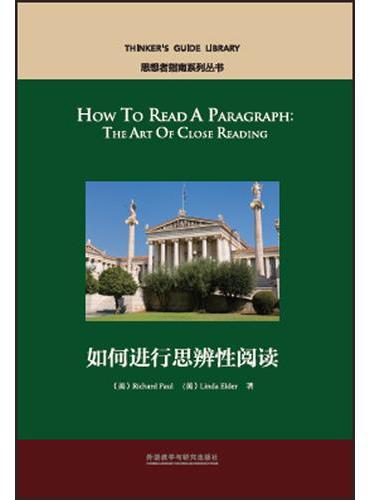
《如何进行思辨性阅读》为思想者指南丛书系列中的一本,属于该系列当中的教学篇,专门为广大教师和学生
设计。《如何进行思辨性阅读》的主要内容为通过思辨技巧的讲解和实例阅读的分析,帮助学生如何进行思辨性阅
读,提升阅读效果和思辨能力。
|
| 內容簡介: |
|
《如何进行思辨性阅读》为思想者指南丛书系列中的一本,属于该系列当中的教学篇,专门为广大教师和学生设计。《如何进行思辨性阅读》的主要内容为通过思辨技巧的讲解和实例阅读的分析,帮助学生如何进行思辨性阅读,提升阅读效果和思辨能力。
|
| 關於作者: |
|
Richard Paul:思辨研究专家,国际思辨研究运动主要负责人,已发表200余篇与思辨研究相关的论文、出版21部论述思辨研究的著作。Linda Elder:教育心理学专家、思辨研究专家,在美国多所大学任教,主要教授课程为教育心理学、思辨能力培养;思辨研究协会会长、思辨中心执行主任。
|
| 目錄:
|
The Theory
The Premise of This Guide 1
Reading for a Purpose 1
Considering the Authors Purpose 2
Developing a Map of Knowledge 3
Avoiding Impressionistic Reading and Writing 4
Reading Reflectively 5
Thinking About Reading While Reading 5
Student-Generated Map of Knowledge 6
Faculty-Generated Map of Knowledge 7
Engaging a Text 8
Books Are Teachers 8
Reading Minds 8
The Work of Reading 10
Five Levels of Close Reading 11
Structural Reading 14
How to Read a Sentence 14
How to Read a Paragraph 15
How to Read a Textbook 15
How to Read a Newspaper 17
How to Read an Editorial 18
Taking Ownership of What You Read: Mark It Up 19
Reading to Learn 21
Reading to Understand Systems of Thought 21
Reading Within Disciplines 22
The Art of Close Reading 22
The Practice: Exercises in Close Reading
The Declaration of Independence 25
Civil Disobedience 33
The Nineteenth-Century American 39
The Art of Loving 44
Corn-Pone Opinions 50
The Revolt of the Masses 53
The Idea of Education 56
Appendices
Appendix A: Sample Paraphrases 61
Appendix B: Analyzing the Logic of an Article, Essay, or Chapter 62
Appendix C: Analyzing the Logic of a Textbook 64
Appendix D: Marking Up a Text to Take Ownership of It: Example One 65
Marking Up a Text to Take Ownership of It: Example Two 66
Appendix E: The Logic of Ecology 67
References 68
|
|

 購物車/收銀台(0) | 在線留言板
| 付款方式
| 聯絡我們
| 運費計算
| 幫助中心 |
加入書簽
購物車/收銀台(0) | 在線留言板
| 付款方式
| 聯絡我們
| 運費計算
| 幫助中心 |
加入書簽 HOME
HOME 新書上架
新書上架