新書推薦:

《
亚历山大在世界尽头 一代大帝开疆拓土和创造时代的东征史诗!全景展现亚历山大大帝无畏的雄心、辉煌的成就
》
售價:NT$
408

《
生命的法则(2026年版)
》
售價:NT$
561

《
守护我们终将衰退的大脑:阿尔茨海默病防治全书 (一线医生写给中国家庭的阿尔茨海默病防治指南)
》
售價:NT$
301
《
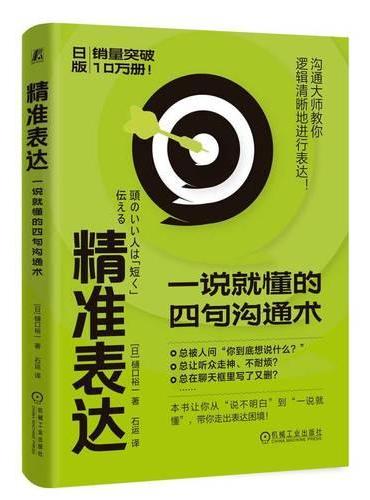
精准表达:一说就懂的四句沟通术
》
售價:NT$
305

《
愤怒的葡萄(陈宗琛译本;美国版《活着》,一部扎根生活的人间史诗)
》
售價:NT$
337

《
鲁迅与抗日战争--启蒙与救亡(鲁迅文化基金会丛书)
》
售價:NT$
398

《
2045:AI改变人类未来的十大趋势(揭示未来二十年超级震撼的科技变革全景图)
》
售價:NT$
347

《
沟通:终身原则(第八版)
》
售價:NT$
1010
|
| 編輯推薦: |
思辨能力的高下将决定一个人学业的优劣、事业的成败乃至一个民族的兴衰。在此意义上,我向全国中小学教师、
高等学校教师和学生以及社会大众郑重推荐思想者指南系列丛书。相信该套丛书的普及阅读和学习运用,必将
有利于促进教育改革,提高人才培养质量,提升大众思辨能力,为创新型国家建设和社会文明进步作出深远的贡
献。(孙有中,教授,北京外国语大学副校长)
|
| 內容簡介: |
|
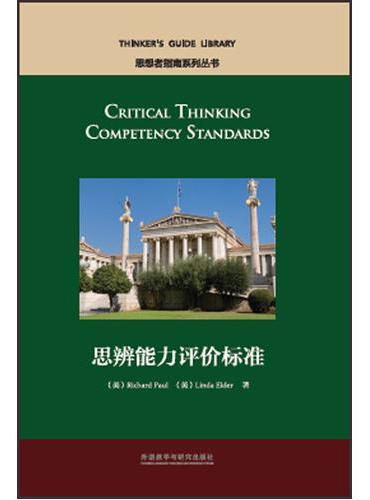
《思辨能力评价标准》是思想者指南系列丛书当中的一本,属于该系列下的教学篇,主要供广大教师和学生使用,也可供学习思想者指南系列丛书的广大读者使用。《思辨能力评价标准》通过介绍并阐述思辨能力批判性思维如何进行评价,来帮助读者了解、分析自己的思辨能力层次。
|
| 關於作者: |
|
Richard Paul:思辨研究专家,国际思辨研究运动主要负责人,已发表200余篇与思辨研究相关的论文、出版25部论述思辨研究的著作。Linda Elder:教育心理学专家、思辨研究专家,在美国多所大学任教,主要教授课程为教育心理学、思辨能力培养;思辨研究协会会长、思辨中心执行主任。
|
| 目錄:
|
Letter to the Reader. . . . . . . . . . . . . . . . vii
Critical Thinking Competency Standards: Guide for Educators
The Structure of This Guide . . . . . . . . . . . . . . . . 2
Understanding the Intimate Relationship Between Critical Thinking, Learning, and Education
The Concept of Critical Thinking 4
The What and the How of Education 5
Critical Thinking Is the How for Obtaining Every Educational What . 5
Critical Thinking and Learning 7
Critical Thinking and the Educated Person . 8
Critical Thinking and Information Literacy . 8
The Growing Importance of Critical Thinking . . . . . . . . . . . . . . . . . . . . . . . . . .
.10
Critical and Creative Thinking . 10
Critical Thinking and the Mastery of Content 11
Adapting the Standards for Particular Subjects 13
The Structure and Components of the Competencies
Relating the Competencies to Critical Thinking Concepts 15
Outlining the Components in Each Competency . . . . . . . . . . . . . . . . . . . . . . . . . .
.16
A Master Rubric 18
The Critical Thinking Competencies
Standard One: Purposes, Goals, and Objectives . 20
Standard Two: Questions, Problems, and Issues 21
Standard Three: Information, Data, Evidence, and Experience 22
Standard Four: Inferences and Interpretations . 23
Standard Five: Assumptions Presuppositions 24
Standard Six: Concepts, Theories, Principles, Definitions, Laws, and Axioms . 25
Standard Seven: Implications and Consequences . 26
Standard Eight: Points of View and Frames of Reference . 27
Standard Nine: Assessing Thinking . 29
Standard Ten: Fairmindedness 31
Standard Eleven: Intellectual Humility . 32
Standard Twelve: Intellectual Courage 33
Standard Thirteen: Intellectual Empathy 34
Standard Fourteen: Intellectual Integrity . 35
Standard Fifteen: Intellectual Perseverance 36
Standard Sixteen: Confidence in Reason
|
|

 購物車/收銀台(0) | 在線留言板
| 付款方式
| 聯絡我們
| 運費計算
| 幫助中心 |
加入書簽
購物車/收銀台(0) | 在線留言板
| 付款方式
| 聯絡我們
| 運費計算
| 幫助中心 |
加入書簽 HOME
HOME 新書上架
新書上架